I think I am on a roll about good news. Since writing my previous blog I have had many conversations with people who are fed up with all the gloom. So today I am also writing about good things happening in the NHS.
I will start with an update about my Mum. Those of you who have read my blog in the past will know about my Mum and the problems she faced last year. She is 94 next week and has escalating problems with dementia. Last year she had the classic story of a series of falls, increasing anxiety and 3 unnecessary urgent admissions at a hospital because there was nowhere else for her to go and in the end was placed in a nursing home as a place of safety because being home was no longer manageable. Having visits for 21 different carers a week and then probably 15 other people popping in with meals, medication, monitoring her falls risks and her mental state etc etc was just too much for someone already confused and frightened by her confusion. It could so easily have ended there… but we were lucky. She lives in an area where there is “extra care”. Having read Roy Lilleys’s blog I now realise this isn’t universal so we as a family have been lucky.
We as a CCG are also lucky that our local authority are developing extra care at pace across the county.
So what is extra care?.. ... My Mum still has her own flat, her own front door. She is still home. A team of carers work in the building and Mum has got to know them and to trust them. Although that did take time. At first she wouldn’t shower or wash, but then why should it be easier for her to get naked with a stranger just because she is old? She showers now. At first she was rude and difficult with the carers lecturing them about their educational achievements and that they should try harder. She was a teacher. It was excruciating to witness but the carers managed her with kindness and tolerance and gradually as it all became more familiar she became calmer. She has meals with all the other residents at midday and her other meals prepared by the carers in her flat. A team of people do her shopping, washing and cleaning. When she falls ,night or day she calls them and they are there on the premises, they assess her and then pop her back in her chair or into bed. No 999, no A&E. AS long as her behaviour remains manageable she should be able to stay there as her memory shrinks further. She is content. Her aggression is very much linked to anxiety so hopefully now everything is familiar it won’t be a problems although of course you never know. Many extra care facilities keep people even when they are very demented. Technology allows monitoring of wandering , falling etc. My Mum is also no longer lonely. The carers and other residents have become part of her world rather than strangers and although she doesn’t talk to them much they give her a sense of community and belonging.
I was at a public meeting locally when someone in the audience said they would hate to live in a place like that “ a rabbit hutch for old people” and yes I can see why when you look in from the outside it might seem like that but what I have learned from watching my Mum is that her needs and aspirations have changed as she has aged and whatever I may think about it ,she is content and that is what matters.
As a CCG we are working with our Local Authority to develop integrated health and extra care models to jointly commission facilities where frail older people can be supported to be independent but access the care and the companionship they need. Maybe a community hospital co-located with an extra care building with shared staff and more importantly shared ethos. We could also add housing for younger people living with serious chronic illness or disability, who need nursing and care support but are keen to live independently. These new developments will take time and will need our public to be along side us. For now we are working with the local authority to get the best out the ones already built so that we maximise joined up input to keep residents as healthy as they can be for a long as possible .
This morning I was discussing with one of our local physicians from our local acute trust the recent experience of his pilot in our local A&E where he and a colleague work two shifts a week to trial consultant assessment at the front of house. Yesterday evening he saw 8 patients, sent 6 home with the much improved community and social care support that we have been developing over the last year including night caring, integrated neighbourhood health and social care teams, better resourced social care assessment and fast response etc. One of the two who were admitted clearly could have been managed at home with the right more enhanced home care so we will work to provide that. So that is 6 patients who would have found their way into an acute bed able to go home and have their treatment and care there. Last year our urgent admissions reduced by 3%. He is convinced that because we have good primary and community care we can manage more of the people at present on his wards at home. With investments we are making this year we can do it better and for more people. We just need the collective will and the confidence to do it. We are developing a “hot clinic” in our community hospital run by physicians, therapists, social care and community nursing to urgently address the needs of older people who are becoming frail before they hit a crisis.
It is all good stuff. Is it big enough? Well, you could look at each initiative and accuse CCGs of playing at the edges, not being strategic or ambitious enough. Or you could see each scheme as part of a much bigger picture and acknowledge that CCGs are making changes on the ground; changes that mean better services for individual patients and their families; changes led by local doctors, nurses ,social workers and therapists; changes that are there to address the difficult issues no one in the past has had the will to sort out, changes that will add up to a better system, a system that is better than the sum of its parts.
Tuesday, 29 April 2014

Thursday, 17 April 2014
Getting better?
We read a lot about how bad things are in the NHS… how tough life is for staff how terrible for patients… but it is never universally true..and there are good news stories too. WE don’t often hear them because somehow they aren’t as news worthy… it is sad to me that a good news story comes and goes , little is said about it whilst bad news is the stuff we discuss in coffee shops across the land…..what does it say about us all that we would rather dissect all the bad things that happen rather than celebrate the good.?
Our GPs were successful in getting the challenge fund bid. An injection of cash which allows them to really work on how to improve primary care into the future and the time and space to do it right: A rare opportunity, a fantastic thing. It was covered my our local paper on the front page but we hardly received a call from the media who are normally all over us when something is difficult or contentious. One of my colleagues said to me yesterday they were surprised by the lack of interest. Many members of the public stop me in the street and ask me why they don’t heard more about the good things we are doing. Well we try, but putting out press releases it not the same thing as getting things into the press!
We have lots of good news! As a health economy we have balanced our books for the first time in many many years.. having paid back debt inherited from our PCT. We are investing in community services to build a robust and coordinated community system, mental health services especially services for people with dementia. We are putting back things our PCT had stripped out in an ever increasingly desperate attempt to balance.. like IVF. .investment in weight management services, autism services, counselling services etc..etc… Staff who came with us from the PCT are excited and energised because we are actually getting to do the right things..rather than endlessly talking about taking reducing services… we are building our communities, strengthening local services, working in collaboration with our GPs to make things better, brining care closer to home. We have wrapped up our local enhanced service monies into one basket scheme and added some to it, so it is now an “out of hospital scheme” and includes the monitoring of stable prostate cancer patients, acute catheterisation, taking patients from the ambulance service who called 999 but are assessed as being suitable for GP services, DVT assessment et etc and is now delivered by all our practices to all our patients. Fantastic.. and we will add more.. .we are now looking at preoperative assessment etc. It is actually taking care out of distant hospitals and bringing it home. It is a small but important change and by doing it for every patient we can actually decommission the service from the acute hospital. It is one small example of something good. Many have written that CCGS haven’t delivered. My response is give us a chance! We have only been here for a year. Show me the PCT that made significant change in a year! And we all know that transformational change is actually a series of small changes that build a new system.. a pointillist painting…
It almost feels now that saying positive things isnt allowed... we are all supposed just to say how difficult and awful everything is. I remember years ahgo I went to a conference where a "motivational speaker" was first on the agenda. AS we waited for her my heart sank..this is going to be a waste of time/embarrasing etc but it was amazing. She challenged us all about our positivity.She asked us to stand up and tell the audience something great we had done over the previous weekend. We all loooked to the floor avoiding eye contact. She then posed the question " why do children go into school on Mondays bursting to tell the class about the wonderful things they did at the weekend whilst when I asked you you all stared at the floor? When does that happen?
WE have fun at work. WE laugh. We DO. We are proud of what we are doing. IT feels good.
We know there are clouds looming. WE aren’t immune from the threats we all face but can we please please sometimes celebrate the good?
Our GPs were successful in getting the challenge fund bid. An injection of cash which allows them to really work on how to improve primary care into the future and the time and space to do it right: A rare opportunity, a fantastic thing. It was covered my our local paper on the front page but we hardly received a call from the media who are normally all over us when something is difficult or contentious. One of my colleagues said to me yesterday they were surprised by the lack of interest. Many members of the public stop me in the street and ask me why they don’t heard more about the good things we are doing. Well we try, but putting out press releases it not the same thing as getting things into the press!
We have lots of good news! As a health economy we have balanced our books for the first time in many many years.. having paid back debt inherited from our PCT. We are investing in community services to build a robust and coordinated community system, mental health services especially services for people with dementia. We are putting back things our PCT had stripped out in an ever increasingly desperate attempt to balance.. like IVF. .investment in weight management services, autism services, counselling services etc..etc… Staff who came with us from the PCT are excited and energised because we are actually getting to do the right things..rather than endlessly talking about taking reducing services… we are building our communities, strengthening local services, working in collaboration with our GPs to make things better, brining care closer to home. We have wrapped up our local enhanced service monies into one basket scheme and added some to it, so it is now an “out of hospital scheme” and includes the monitoring of stable prostate cancer patients, acute catheterisation, taking patients from the ambulance service who called 999 but are assessed as being suitable for GP services, DVT assessment et etc and is now delivered by all our practices to all our patients. Fantastic.. and we will add more.. .we are now looking at preoperative assessment etc. It is actually taking care out of distant hospitals and bringing it home. It is a small but important change and by doing it for every patient we can actually decommission the service from the acute hospital. It is one small example of something good. Many have written that CCGS haven’t delivered. My response is give us a chance! We have only been here for a year. Show me the PCT that made significant change in a year! And we all know that transformational change is actually a series of small changes that build a new system.. a pointillist painting…
It almost feels now that saying positive things isnt allowed... we are all supposed just to say how difficult and awful everything is. I remember years ahgo I went to a conference where a "motivational speaker" was first on the agenda. AS we waited for her my heart sank..this is going to be a waste of time/embarrasing etc but it was amazing. She challenged us all about our positivity.She asked us to stand up and tell the audience something great we had done over the previous weekend. We all loooked to the floor avoiding eye contact. She then posed the question " why do children go into school on Mondays bursting to tell the class about the wonderful things they did at the weekend whilst when I asked you you all stared at the floor? When does that happen?
WE have fun at work. WE laugh. We DO. We are proud of what we are doing. IT feels good.
We know there are clouds looming. WE aren’t immune from the threats we all face but can we please please sometimes celebrate the good?
Tuesday, 25 February 2014
Challenging Times
I am slightly surprised to be writing this but The Prime Ministers Challenge Fund has done much to stimulate debate in primary care. WE have seen real enthusiasm to change things. To really get stuck into tackling the intransigent issues that face very rural health care. And this is new. WE have great GPs in our CCG, apparently they score the highest in patient satisfaction in primary care of all CCGs in the country. But they haven’t been at the forefront of innovation. What they have been great at is high quality patient centred traditional general practice that values relationship, continuity, commitment. They are mainly although not exclusively small practices dotted amongst the rolling dales and moors of North Yorkshire.
They are worried about the future, for their own services and for the wider health community. The big change is that now our GPs have said they need to stop complaining and start doing. They are planning bigger that just working together as GP practices, they want to look to providing locally based community services and out of hours services, that work closely with mental health and social care services . All joined up and working together. They are prepared to lead that. That includes looking at a different model for the GP contract too. They have a vision, they are developing how to express it and what to call it.
Most of our practices are MPIG practices and stand to lose a lot of investment over the next few years. The cynics may say that that is why they want to do this but I see it as part of a much bigger picture. It may have made them think differently but the prize of working in a system that delivers local care for local people all joined up, supporting each other reducing duplication, stopping endless journeys to distant hospitals for things that could be delivered locally and developing robust health care hubs ( or whatever you want to call them.. there are many names being banded about) would be an exciting and different place to work. Who wouldn’t want to be part of something amazing like that? Was it the fund alone? Or was it a kind of “perfect storm”? I am not sure.. what I do know is that sometimes that is just how stuff changes. Suddenly and for no apparent reason a lot of different things conspire to bring about significant shifts in attitude, in ambition.
We mustn’t lose this. If it is happening all over the country the NHS needs to find a way to harness all this energy and use it. Thee is £50M for ? 9 pilots. If there is £50M would 25 projects with £2M be another way? 2 million is a lot of money.. our CCG management budget to deliver everything is somewhere around £3.5M, do so few pilots really need so much money? I would hate to lose all this and return to the status quo…..
They are worried about the future, for their own services and for the wider health community. The big change is that now our GPs have said they need to stop complaining and start doing. They are planning bigger that just working together as GP practices, they want to look to providing locally based community services and out of hours services, that work closely with mental health and social care services . All joined up and working together. They are prepared to lead that. That includes looking at a different model for the GP contract too. They have a vision, they are developing how to express it and what to call it.
Most of our practices are MPIG practices and stand to lose a lot of investment over the next few years. The cynics may say that that is why they want to do this but I see it as part of a much bigger picture. It may have made them think differently but the prize of working in a system that delivers local care for local people all joined up, supporting each other reducing duplication, stopping endless journeys to distant hospitals for things that could be delivered locally and developing robust health care hubs ( or whatever you want to call them.. there are many names being banded about) would be an exciting and different place to work. Who wouldn’t want to be part of something amazing like that? Was it the fund alone? Or was it a kind of “perfect storm”? I am not sure.. what I do know is that sometimes that is just how stuff changes. Suddenly and for no apparent reason a lot of different things conspire to bring about significant shifts in attitude, in ambition.
We mustn’t lose this. If it is happening all over the country the NHS needs to find a way to harness all this energy and use it. Thee is £50M for ? 9 pilots. If there is £50M would 25 projects with £2M be another way? 2 million is a lot of money.. our CCG management budget to deliver everything is somewhere around £3.5M, do so few pilots really need so much money? I would hate to lose all this and return to the status quo…..
Thursday, 20 February 2014
Decisions...decisions...
Two weeks ago the Council of Members of the CCG came together to make decisions about the Maternity and Childrens services at our local hospital. WE have been considering change for the last two and a half years and talking to the public about the possibilities, culminating in a public consultation which closed at the end of November. I have written about the issues on my blog before. A small hospital, mall numbers of children need admitting to hospital and no middle grade paediatric cover. A maternity unit with 1200 deliveries a year which also struggles to maintain middle grade staff and increasing concerns about safety, quality and sustainability. This was a clinically led issue.: raised by the doctors and nurses who have led this service for the last 25 years who are worried it won’t be safe into the future.
The GPs wanted to make this decision. Many smaller decisions are made by the governing body working with delegated responsibility from the GPS. However this issue felt too important and the GPs wanted to make it themselves as a group. We wanted to develop an open and transparent way to make these decisions, knowing they would be contentious and difficult., wanting to assure the public that the decisions were made thoughtfully and carefully.
As a starter the Governing Body of the CCG developed a priority framework, which was agreed and adopted by the GPs where each option was rated by every practice team in the CCG on a series of aspects: clinical effectiveness, patient experience, cost effectiveness, safety, access, sustainability and affordability. The practices used all the information we had brought together including a review of the evidence, models used around the country and internationally, economic and equality impact assessments impact of travelling , NCAT assessment and most importantly feedback from the patients and public. The practices then came together with one representative from each practice, each with delegated responsibility to speak for their practice at the meeting and feedback collectively the outcomes of the practice discussions. This was then used to develop both the shortlist for consultation and more recently to decide the outcomes of the consultation.. So for the first time the decision was made by all practices in the CCG working together. It was time consuming for us, and for the practices and could only practically be used for BIG decisions but it felt good to have such a robust method of collective decision making.
And some interesting discussions: was each practice voting on what it thought would be best for its own population or for the populations of the CCG as a whole? One of our three localities is largely unaffected by these changes but still has a role as a commissioner of service, so our job is not simply to reflect the issues for our patients in our practices but to have a wider view for all patients across our CCG. What if the discussion develops and new arguments change the overall views of the group?. Does delegated responsibility mean the rep can change their decision based on what they think their practice would do if it was sitting round the table? We agreed they could. Interestingly that was really only as issue when it came to discussing investments around supporting the changes ,not about the need for change itself.
Was it what I expected? Yes and No…It was great to feel part of a process that felt robust and clear.. Some of their recommendations may be challenging to implement but that is my job! I worried that it wasn’t as “smooth” as it might have been, but it was real and unrehearsed and we are learning.
Our constitution stipulates that the GP council meeting is held in private and the Governing Body in public. It is my understanding that this is true for all CCGs up and down the country. If the council of members make “big “ decisions though, we all agree these really should be made in public. This time we videoed the meeting and will release the video with our formal papers so anyone who wants to can watch the debate and how the decisions were reached. The company who recorded it for us joked that it would “ go viral” Somehow I doubt it! But all the way through this process we have tried to be as open and transparent as we can be about what is happening. When we received alternative options from the public we then invited them to our meetings with the clinical teams at the hospital so they could participate in the debate about those new options and whether they would be feasible. There is no national blue print for this, it is about always challenging ourselves and trying to do it better. We need to discuss with the Council that in future we need to go for full public meetings.
When I first worked in the NHS most decisions were made without any real debate, either with clinicians or with the public, based on opinion not evidence. Things are changing. WE need to continue to develop real open ways of talking, explaining, listening..it is a work in progress..
The GPs wanted to make this decision. Many smaller decisions are made by the governing body working with delegated responsibility from the GPS. However this issue felt too important and the GPs wanted to make it themselves as a group. We wanted to develop an open and transparent way to make these decisions, knowing they would be contentious and difficult., wanting to assure the public that the decisions were made thoughtfully and carefully.
As a starter the Governing Body of the CCG developed a priority framework, which was agreed and adopted by the GPs where each option was rated by every practice team in the CCG on a series of aspects: clinical effectiveness, patient experience, cost effectiveness, safety, access, sustainability and affordability. The practices used all the information we had brought together including a review of the evidence, models used around the country and internationally, economic and equality impact assessments impact of travelling , NCAT assessment and most importantly feedback from the patients and public. The practices then came together with one representative from each practice, each with delegated responsibility to speak for their practice at the meeting and feedback collectively the outcomes of the practice discussions. This was then used to develop both the shortlist for consultation and more recently to decide the outcomes of the consultation.. So for the first time the decision was made by all practices in the CCG working together. It was time consuming for us, and for the practices and could only practically be used for BIG decisions but it felt good to have such a robust method of collective decision making.
And some interesting discussions: was each practice voting on what it thought would be best for its own population or for the populations of the CCG as a whole? One of our three localities is largely unaffected by these changes but still has a role as a commissioner of service, so our job is not simply to reflect the issues for our patients in our practices but to have a wider view for all patients across our CCG. What if the discussion develops and new arguments change the overall views of the group?. Does delegated responsibility mean the rep can change their decision based on what they think their practice would do if it was sitting round the table? We agreed they could. Interestingly that was really only as issue when it came to discussing investments around supporting the changes ,not about the need for change itself.
Was it what I expected? Yes and No…It was great to feel part of a process that felt robust and clear.. Some of their recommendations may be challenging to implement but that is my job! I worried that it wasn’t as “smooth” as it might have been, but it was real and unrehearsed and we are learning.
Our constitution stipulates that the GP council meeting is held in private and the Governing Body in public. It is my understanding that this is true for all CCGs up and down the country. If the council of members make “big “ decisions though, we all agree these really should be made in public. This time we videoed the meeting and will release the video with our formal papers so anyone who wants to can watch the debate and how the decisions were reached. The company who recorded it for us joked that it would “ go viral” Somehow I doubt it! But all the way through this process we have tried to be as open and transparent as we can be about what is happening. When we received alternative options from the public we then invited them to our meetings with the clinical teams at the hospital so they could participate in the debate about those new options and whether they would be feasible. There is no national blue print for this, it is about always challenging ourselves and trying to do it better. We need to discuss with the Council that in future we need to go for full public meetings.
When I first worked in the NHS most decisions were made without any real debate, either with clinicians or with the public, based on opinion not evidence. Things are changing. WE need to continue to develop real open ways of talking, explaining, listening..it is a work in progress..
Tuesday, 4 February 2014
Snow and high winds ahead!
It is hard….. so much guidance, targets, so many plans. Last year we designed our vision and we have had a year to get that off the ground. I don’t know about other CCGS but we have made a good start…investment in the community system, much improved working by health and social care staff, a real and different conversation with the public about what we all want for our area in the future and here anyway less pressure so far on the A&E front door. Some of those changes have been small I agree. Those who wish to put down CCGS laugh at us and challenge the scale of what we are doing. We have to make changes big and small. This year we have been getting people together, developing a joint sense of purpose and direction, we have been testing this out with small but significant changes, we now need to move at scale. WE have done a lot in a year. We want to hang on to that map, that vision for the future.
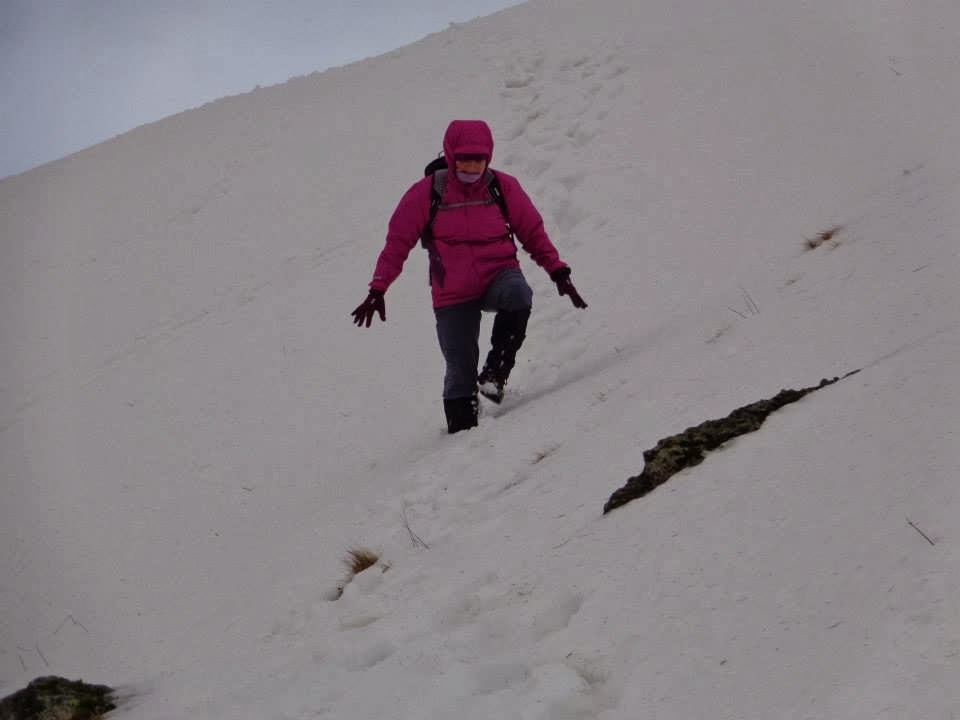
Yesterday I was stood on Base Brown in the Lakes. The views down across Borrowdale were spectacular and the light a little menacing but glorious. The winds were gusty and with ice under your feet and a gale that could blow you over at any moment it felt precarious but the reward was magnificent. Sometimes doing this job feels like that. So much turbulence all around. I learned to seek out the snow and avoid the ice..firm feet make you feel much safer. And I wasn’t alone and I knew my companion to be brave but not foolhardy.
I don’t remember a planning round like this one. So much to take on.. As a CCG we need to be brave we need to keep our feet steady ..rooted in the things we know are right and need to be done whilst not getting blown off course by the many targets and trajectories we are required to submit..There is a risk of getting lost in the process itself.. the worst outcome.. a lovely plan that pleases everyone and yet delivers nothing.. What ever happened to bottom up.. light touch…earned autonomy?
This is THE year.. our chance to change as much as we can as quickly as we can, building on last year.. next year we have elections, smaller management allowances, the better care fund… we have to have changed things this year , we have to be making this happen now.. this week,next week, every week…so fewer people end up in our hospitals, by next year. There are no second chances. By next year it will be too late.
Walks in the Lakes are good.. they clear your head… they give you back a sense of clarity and purpose. The physical challenges replace the intellectual ones for a few hours and allow much needed respite. I think I will be walking a lot this year…..
Monday, 23 December 2013
This Christmas
December has been busy, it always is, everyone trying to fit four weeks' work into two whilst making preparations for celebrating with family and friends.
And much is happening in the health world, we know now what our budget will be next year and the huge hill we have to climb over the next few years. It would be easy to get discouraged. When you look ahead the future seems impossibly bleak (not a good word to use at Christmas), massive, overwhelming challenges and everything you read spreads more doom and gloom.
And yet, last week we had our CCG Christmas do and it was a very upbeat affair. We know we are making a difference. Now. Those differences are important, they aren’t huge but they do matter. We have managed to improve ambulance response times in a rural area that have been stuck at very low levels (56% eight-minute response) for the last 15 years. How?
Partnership working with GPs and the ambulance service and a series of small schemes that stop patients being transported to A&E when they could be treated locally. In October they were up to 81%. We won’t maintain that during the winter we know but know we have a model that we will continue to improve. That makes a difference to people living in a very rural area, who worry that when they need it most an ambulance won’t be there in time.
We have integrated health and social care fast response at night now. What does that mean? Well in means that if an out-of-hours GP visits a frail older person in the middle of the night who isn’t very well but really doesn’t need to be in a hospital bed we have a service that can keep her at home, even if that means someone being with her for a few hours.
We have increased district nursing teams, which had been salami-sliced down to a skeletal service. And it is making a difference you can feel on the ground and measure as emergency admissions are at least holding steady.
And at the same time we think we can pay off our inherited debt and finally get our health economy into balance for the first time in many years.
What has this taught me? Transformation is incremental. It isn’t some big bang that happens overnight. It involves tiny steps. It is all about hearts and minds. It takes time. But it is possible to change things, if you focus on the now.
I don’t just want to tell people what we are planning to do, I want to be able to describe what we have done. I don’t want to spend all my time planning five years down the line whilst being too busy to change tomorrow. We are a little team and resources in terms of human energy and health are finite. There are choices to be made.
So when I think about those huge greys clouds tumbling towards us all over the next few years, my response is to focus on now. To make things different tomorrow, next week and next month. I don’t want to spend too much time worrying myself and our organisation because the risk is that the worry creates paralysis.
Yes I know it is important to have a vision for where you will be in five years. I remember though that I read an article years ago (can’t find it for this blog but know it existed!) which looked at five-year plans and their accuracy and basically very little of the detail in a five-year plan ever comes to pass because so much changes in the mean time.
What we need is a clear direction of travel. A high-level map that will help us find the way but will not insist we travel on the route we originally suggested if a better road is found in the intervening years. Will we be here then? Probably not. Will the NHS landscape have changed again? Definitely. What we do have is an opportunity here and now to make things better for the patients we serve.
Those of you who have read my blog will know I often write about my mother who is 93 and very frail. She has had a tough year, four falls, three emergency admissions, a stay in a nursing home, rapidly progressing problems with her memory and mood.
She is now in an extra care flat and finally she is doing OK. She is smaller than she was a year ago in so many ways but the consistency of the care support she now has and their infinite patience and sensitivity has meant she is coping, for now. What have I learned as her daughter and an NHS leader? Small steps and realistic goals will bring change.
So, happy Christmas. Let us celebrate. So much has gone well this year despite the headlines. We have much to do in the new year!
And much is happening in the health world, we know now what our budget will be next year and the huge hill we have to climb over the next few years. It would be easy to get discouraged. When you look ahead the future seems impossibly bleak (not a good word to use at Christmas), massive, overwhelming challenges and everything you read spreads more doom and gloom.
And yet, last week we had our CCG Christmas do and it was a very upbeat affair. We know we are making a difference. Now. Those differences are important, they aren’t huge but they do matter. We have managed to improve ambulance response times in a rural area that have been stuck at very low levels (56% eight-minute response) for the last 15 years. How?
Partnership working with GPs and the ambulance service and a series of small schemes that stop patients being transported to A&E when they could be treated locally. In October they were up to 81%. We won’t maintain that during the winter we know but know we have a model that we will continue to improve. That makes a difference to people living in a very rural area, who worry that when they need it most an ambulance won’t be there in time.
We have integrated health and social care fast response at night now. What does that mean? Well in means that if an out-of-hours GP visits a frail older person in the middle of the night who isn’t very well but really doesn’t need to be in a hospital bed we have a service that can keep her at home, even if that means someone being with her for a few hours.
We have increased district nursing teams, which had been salami-sliced down to a skeletal service. And it is making a difference you can feel on the ground and measure as emergency admissions are at least holding steady.
And at the same time we think we can pay off our inherited debt and finally get our health economy into balance for the first time in many years.
What has this taught me? Transformation is incremental. It isn’t some big bang that happens overnight. It involves tiny steps. It is all about hearts and minds. It takes time. But it is possible to change things, if you focus on the now.
I don’t just want to tell people what we are planning to do, I want to be able to describe what we have done. I don’t want to spend all my time planning five years down the line whilst being too busy to change tomorrow. We are a little team and resources in terms of human energy and health are finite. There are choices to be made.
So when I think about those huge greys clouds tumbling towards us all over the next few years, my response is to focus on now. To make things different tomorrow, next week and next month. I don’t want to spend too much time worrying myself and our organisation because the risk is that the worry creates paralysis.
Yes I know it is important to have a vision for where you will be in five years. I remember though that I read an article years ago (can’t find it for this blog but know it existed!) which looked at five-year plans and their accuracy and basically very little of the detail in a five-year plan ever comes to pass because so much changes in the mean time.
What we need is a clear direction of travel. A high-level map that will help us find the way but will not insist we travel on the route we originally suggested if a better road is found in the intervening years. Will we be here then? Probably not. Will the NHS landscape have changed again? Definitely. What we do have is an opportunity here and now to make things better for the patients we serve.
Those of you who have read my blog will know I often write about my mother who is 93 and very frail. She has had a tough year, four falls, three emergency admissions, a stay in a nursing home, rapidly progressing problems with her memory and mood.
She is now in an extra care flat and finally she is doing OK. She is smaller than she was a year ago in so many ways but the consistency of the care support she now has and their infinite patience and sensitivity has meant she is coping, for now. What have I learned as her daughter and an NHS leader? Small steps and realistic goals will bring change.
So, happy Christmas. Let us celebrate. So much has gone well this year despite the headlines. We have much to do in the new year!
Monday, 18 November 2013
Health care and politics
Well, we ended up causing a bit of media flurry ( I wouldn’t call it a storm.. that would be a bit of an overstatement!). We didn’t set out to do that but these things happen. The issues underpinning this are worth a bit of unpicking.
We are in the middle of a complex public consultation about paediatric and maternity services in our local area. Not a fight we chose to have but one the local trust asked us to become involved in because the doctors and nurses were concerned about safety and quality standards in the hospital. It has been a long and sometimes challenging journey over more than 2 years. From the beginning we have chosen to do it differently- to get out there and talk to the public with the consultants- at playgroups, childrens centres and sixth form colleges, working with local interest groups and local politicians.
During the present formal part of this we have had about 250 people attend 9 meetings, out of a population of around 120000. After one of the meetings we lodged complaints with the county council about the behaviour of two local councillors. We did that the way we were supposed to, as it told us to on the website. We didn’t “go public” we wrote to the council formally raising our concerns. One of the councillors then chose to share the contents of the complaint with the local press and suddenly we found ourselves in the HSJ and everyone then has a view about the rights and wrongs of it all. Some think we are “naïve”, we need a thicker skin.
I am completely committed to democracy.. .that means I will do everything in my power to make sure that someone who has the opposite opinion to me has the right to express it, as loudly and fully as they wish to. I enjoy debate and discussion and the reasoned development of consensus. I am not intimidated by those who hold opinions entirely opposed to mine. That is how it should be. My job is to clearly express our views, our interpretation of the situation. In those discussions though, we should be able to express our views without unwarranted and baseless attacks on our motives and our integrity. The debate should be about the issues NOT the personalities. We were not “upset” by the behaviour. We are tougher than that. We felt however that behaviour of that sort damaged still further public confidence in all of us who work in the public sector. The people I was with that evening were clinical professionals: those nurses and doctors who have spent their professional lives dedicated to serving their local population to the best of their abilities. They have done so with integrity and professionalism. They were there to talk and to listen. The views they expressed were based on evidence and professional knowledge.
We as a CCG believe we must do the right thing, not the easy thing but the right thing. We are a values driven organisation and have explicitly committed ourselves to developing an open culture that is necessarily different from that pervasive culture of bullying and secrecy that has existed in the NHS for the last few years: the outputs of which are constantly in the news and bring shame to us all. We judge our progress and our success by our values: Integrity, Transparency, Collaboration, Focus, Action , Energy, and Courage.
In a wider context I see the need for same debate. Recently I had an interesting discussion with my kids, now young adults, and their friends about why they don’t vote. They tell me that have nothing in common with the politicians they see on TV: the jeering and point scoring during debates in the Houses of Parliament, the behaviours, the language, the endless sniping, the inability to answer a straight question. They have no confidence in any of them. Neither do they have much confidence now in those who run the health service, or education and social care, for that matter. Interestingly last week there were similar debates on the PM programme on Radio 4 after comments by Jeremy Paxman and Russell Brand.
If we are going to re-establish that trust we have to be different and that means BEHAVE differently. WE all have to behave better and expect better. If we tolerate poor behaviour we are in the end implicitly condoning it. If we as a CCG are committed to treating everyone we come into contact with well, to being open and honest, even when that is difficult, to be respectful and demonstrate integrity. We demand to be treated fairly. We do not expect to be given an easy ride. We enjoy robust and challenging debate. We do not need to be taken care of. But we should expect to be treated with respect. Why should we be accused of being naïve to simply expect to be treated decently? Whilst we as a CCG are busy trying to challenge and change the culture in our corner of the NHS we need also to focus on changing the culture more widely in public life.
It would have been easier to put up and shut up. As everyone has done in the past: oh it is just how they are..it is what you expect from politicians. Why should we do that? If we do nothing – nothing changes. It is important to be brave enough to challenge the status quo. That is why we chose to make that complaint. Not from a place of weakness but from a place of strength. We knew it might make waves but we wanted to put a marker in the sand that says we ( NHS, county councils, politicians etc) as servants of the people shouldn’t treat each other badly in public. It does none of us any favours. Is only makes us all look inept and petty. If we have to resort to personal comments about motives and lack of integrity we have already lost the argument AND lost the respect of the public who watch and listen to the pantomime. I would not tolerate that sort of behaviour in my private life so why should I condone it in my public life?
None of us, know what the public really think. Local politicians are voted in by small percentages of the public. We, in the NHS do consultations, surveys and focus groups but the truth we all have to face is that none of us know what the silent majority, those who don’t come to talk to any of us, really think. If we are ever to improve that situation we have to grapple with this issue, we have to persuade them it is worth participating, that collectively we are worth listening to. We therefore all have a role to play in changing the culture not just of the NHS but of our public life.
We are in the middle of a complex public consultation about paediatric and maternity services in our local area. Not a fight we chose to have but one the local trust asked us to become involved in because the doctors and nurses were concerned about safety and quality standards in the hospital. It has been a long and sometimes challenging journey over more than 2 years. From the beginning we have chosen to do it differently- to get out there and talk to the public with the consultants- at playgroups, childrens centres and sixth form colleges, working with local interest groups and local politicians.
During the present formal part of this we have had about 250 people attend 9 meetings, out of a population of around 120000. After one of the meetings we lodged complaints with the county council about the behaviour of two local councillors. We did that the way we were supposed to, as it told us to on the website. We didn’t “go public” we wrote to the council formally raising our concerns. One of the councillors then chose to share the contents of the complaint with the local press and suddenly we found ourselves in the HSJ and everyone then has a view about the rights and wrongs of it all. Some think we are “naïve”, we need a thicker skin.
I am completely committed to democracy.. .that means I will do everything in my power to make sure that someone who has the opposite opinion to me has the right to express it, as loudly and fully as they wish to. I enjoy debate and discussion and the reasoned development of consensus. I am not intimidated by those who hold opinions entirely opposed to mine. That is how it should be. My job is to clearly express our views, our interpretation of the situation. In those discussions though, we should be able to express our views without unwarranted and baseless attacks on our motives and our integrity. The debate should be about the issues NOT the personalities. We were not “upset” by the behaviour. We are tougher than that. We felt however that behaviour of that sort damaged still further public confidence in all of us who work in the public sector. The people I was with that evening were clinical professionals: those nurses and doctors who have spent their professional lives dedicated to serving their local population to the best of their abilities. They have done so with integrity and professionalism. They were there to talk and to listen. The views they expressed were based on evidence and professional knowledge.
We as a CCG believe we must do the right thing, not the easy thing but the right thing. We are a values driven organisation and have explicitly committed ourselves to developing an open culture that is necessarily different from that pervasive culture of bullying and secrecy that has existed in the NHS for the last few years: the outputs of which are constantly in the news and bring shame to us all. We judge our progress and our success by our values: Integrity, Transparency, Collaboration, Focus, Action , Energy, and Courage.
In a wider context I see the need for same debate. Recently I had an interesting discussion with my kids, now young adults, and their friends about why they don’t vote. They tell me that have nothing in common with the politicians they see on TV: the jeering and point scoring during debates in the Houses of Parliament, the behaviours, the language, the endless sniping, the inability to answer a straight question. They have no confidence in any of them. Neither do they have much confidence now in those who run the health service, or education and social care, for that matter. Interestingly last week there were similar debates on the PM programme on Radio 4 after comments by Jeremy Paxman and Russell Brand.
If we are going to re-establish that trust we have to be different and that means BEHAVE differently. WE all have to behave better and expect better. If we tolerate poor behaviour we are in the end implicitly condoning it. If we as a CCG are committed to treating everyone we come into contact with well, to being open and honest, even when that is difficult, to be respectful and demonstrate integrity. We demand to be treated fairly. We do not expect to be given an easy ride. We enjoy robust and challenging debate. We do not need to be taken care of. But we should expect to be treated with respect. Why should we be accused of being naïve to simply expect to be treated decently? Whilst we as a CCG are busy trying to challenge and change the culture in our corner of the NHS we need also to focus on changing the culture more widely in public life.
It would have been easier to put up and shut up. As everyone has done in the past: oh it is just how they are..it is what you expect from politicians. Why should we do that? If we do nothing – nothing changes. It is important to be brave enough to challenge the status quo. That is why we chose to make that complaint. Not from a place of weakness but from a place of strength. We knew it might make waves but we wanted to put a marker in the sand that says we ( NHS, county councils, politicians etc) as servants of the people shouldn’t treat each other badly in public. It does none of us any favours. Is only makes us all look inept and petty. If we have to resort to personal comments about motives and lack of integrity we have already lost the argument AND lost the respect of the public who watch and listen to the pantomime. I would not tolerate that sort of behaviour in my private life so why should I condone it in my public life?
None of us, know what the public really think. Local politicians are voted in by small percentages of the public. We, in the NHS do consultations, surveys and focus groups but the truth we all have to face is that none of us know what the silent majority, those who don’t come to talk to any of us, really think. If we are ever to improve that situation we have to grapple with this issue, we have to persuade them it is worth participating, that collectively we are worth listening to. We therefore all have a role to play in changing the culture not just of the NHS but of our public life.
Subscribe to:
Posts (Atom)