I am slightly surprised to be writing this but The Prime Ministers Challenge Fund has done much to stimulate debate in primary care. WE have seen real enthusiasm to change things. To really get stuck into tackling the intransigent issues that face very rural health care. And this is new. WE have great GPs in our CCG, apparently they score the highest in patient satisfaction in primary care of all CCGs in the country. But they haven’t been at the forefront of innovation. What they have been great at is high quality patient centred traditional general practice that values relationship, continuity, commitment. They are mainly although not exclusively small practices dotted amongst the rolling dales and moors of North Yorkshire.
They are worried about the future, for their own services and for the wider health community. The big change is that now our GPs have said they need to stop complaining and start doing. They are planning bigger that just working together as GP practices, they want to look to providing locally based community services and out of hours services, that work closely with mental health and social care services . All joined up and working together. They are prepared to lead that. That includes looking at a different model for the GP contract too. They have a vision, they are developing how to express it and what to call it.
Most of our practices are MPIG practices and stand to lose a lot of investment over the next few years. The cynics may say that that is why they want to do this but I see it as part of a much bigger picture. It may have made them think differently but the prize of working in a system that delivers local care for local people all joined up, supporting each other reducing duplication, stopping endless journeys to distant hospitals for things that could be delivered locally and developing robust health care hubs ( or whatever you want to call them.. there are many names being banded about) would be an exciting and different place to work. Who wouldn’t want to be part of something amazing like that? Was it the fund alone? Or was it a kind of “perfect storm”? I am not sure.. what I do know is that sometimes that is just how stuff changes. Suddenly and for no apparent reason a lot of different things conspire to bring about significant shifts in attitude, in ambition.
We mustn’t lose this. If it is happening all over the country the NHS needs to find a way to harness all this energy and use it. Thee is £50M for ? 9 pilots. If there is £50M would 25 projects with £2M be another way? 2 million is a lot of money.. our CCG management budget to deliver everything is somewhere around £3.5M, do so few pilots really need so much money? I would hate to lose all this and return to the status quo…..
Tuesday, 25 February 2014

Thursday, 20 February 2014
Decisions...decisions...
Two weeks ago the Council of Members of the CCG came together to make decisions about the Maternity and Childrens services at our local hospital. WE have been considering change for the last two and a half years and talking to the public about the possibilities, culminating in a public consultation which closed at the end of November. I have written about the issues on my blog before. A small hospital, mall numbers of children need admitting to hospital and no middle grade paediatric cover. A maternity unit with 1200 deliveries a year which also struggles to maintain middle grade staff and increasing concerns about safety, quality and sustainability. This was a clinically led issue.: raised by the doctors and nurses who have led this service for the last 25 years who are worried it won’t be safe into the future.
The GPs wanted to make this decision. Many smaller decisions are made by the governing body working with delegated responsibility from the GPS. However this issue felt too important and the GPs wanted to make it themselves as a group. We wanted to develop an open and transparent way to make these decisions, knowing they would be contentious and difficult., wanting to assure the public that the decisions were made thoughtfully and carefully.
As a starter the Governing Body of the CCG developed a priority framework, which was agreed and adopted by the GPs where each option was rated by every practice team in the CCG on a series of aspects: clinical effectiveness, patient experience, cost effectiveness, safety, access, sustainability and affordability. The practices used all the information we had brought together including a review of the evidence, models used around the country and internationally, economic and equality impact assessments impact of travelling , NCAT assessment and most importantly feedback from the patients and public. The practices then came together with one representative from each practice, each with delegated responsibility to speak for their practice at the meeting and feedback collectively the outcomes of the practice discussions. This was then used to develop both the shortlist for consultation and more recently to decide the outcomes of the consultation.. So for the first time the decision was made by all practices in the CCG working together. It was time consuming for us, and for the practices and could only practically be used for BIG decisions but it felt good to have such a robust method of collective decision making.
And some interesting discussions: was each practice voting on what it thought would be best for its own population or for the populations of the CCG as a whole? One of our three localities is largely unaffected by these changes but still has a role as a commissioner of service, so our job is not simply to reflect the issues for our patients in our practices but to have a wider view for all patients across our CCG. What if the discussion develops and new arguments change the overall views of the group?. Does delegated responsibility mean the rep can change their decision based on what they think their practice would do if it was sitting round the table? We agreed they could. Interestingly that was really only as issue when it came to discussing investments around supporting the changes ,not about the need for change itself.
Was it what I expected? Yes and No…It was great to feel part of a process that felt robust and clear.. Some of their recommendations may be challenging to implement but that is my job! I worried that it wasn’t as “smooth” as it might have been, but it was real and unrehearsed and we are learning.
Our constitution stipulates that the GP council meeting is held in private and the Governing Body in public. It is my understanding that this is true for all CCGs up and down the country. If the council of members make “big “ decisions though, we all agree these really should be made in public. This time we videoed the meeting and will release the video with our formal papers so anyone who wants to can watch the debate and how the decisions were reached. The company who recorded it for us joked that it would “ go viral” Somehow I doubt it! But all the way through this process we have tried to be as open and transparent as we can be about what is happening. When we received alternative options from the public we then invited them to our meetings with the clinical teams at the hospital so they could participate in the debate about those new options and whether they would be feasible. There is no national blue print for this, it is about always challenging ourselves and trying to do it better. We need to discuss with the Council that in future we need to go for full public meetings.
When I first worked in the NHS most decisions were made without any real debate, either with clinicians or with the public, based on opinion not evidence. Things are changing. WE need to continue to develop real open ways of talking, explaining, listening..it is a work in progress..
The GPs wanted to make this decision. Many smaller decisions are made by the governing body working with delegated responsibility from the GPS. However this issue felt too important and the GPs wanted to make it themselves as a group. We wanted to develop an open and transparent way to make these decisions, knowing they would be contentious and difficult., wanting to assure the public that the decisions were made thoughtfully and carefully.
As a starter the Governing Body of the CCG developed a priority framework, which was agreed and adopted by the GPs where each option was rated by every practice team in the CCG on a series of aspects: clinical effectiveness, patient experience, cost effectiveness, safety, access, sustainability and affordability. The practices used all the information we had brought together including a review of the evidence, models used around the country and internationally, economic and equality impact assessments impact of travelling , NCAT assessment and most importantly feedback from the patients and public. The practices then came together with one representative from each practice, each with delegated responsibility to speak for their practice at the meeting and feedback collectively the outcomes of the practice discussions. This was then used to develop both the shortlist for consultation and more recently to decide the outcomes of the consultation.. So for the first time the decision was made by all practices in the CCG working together. It was time consuming for us, and for the practices and could only practically be used for BIG decisions but it felt good to have such a robust method of collective decision making.
And some interesting discussions: was each practice voting on what it thought would be best for its own population or for the populations of the CCG as a whole? One of our three localities is largely unaffected by these changes but still has a role as a commissioner of service, so our job is not simply to reflect the issues for our patients in our practices but to have a wider view for all patients across our CCG. What if the discussion develops and new arguments change the overall views of the group?. Does delegated responsibility mean the rep can change their decision based on what they think their practice would do if it was sitting round the table? We agreed they could. Interestingly that was really only as issue when it came to discussing investments around supporting the changes ,not about the need for change itself.
Was it what I expected? Yes and No…It was great to feel part of a process that felt robust and clear.. Some of their recommendations may be challenging to implement but that is my job! I worried that it wasn’t as “smooth” as it might have been, but it was real and unrehearsed and we are learning.
Our constitution stipulates that the GP council meeting is held in private and the Governing Body in public. It is my understanding that this is true for all CCGs up and down the country. If the council of members make “big “ decisions though, we all agree these really should be made in public. This time we videoed the meeting and will release the video with our formal papers so anyone who wants to can watch the debate and how the decisions were reached. The company who recorded it for us joked that it would “ go viral” Somehow I doubt it! But all the way through this process we have tried to be as open and transparent as we can be about what is happening. When we received alternative options from the public we then invited them to our meetings with the clinical teams at the hospital so they could participate in the debate about those new options and whether they would be feasible. There is no national blue print for this, it is about always challenging ourselves and trying to do it better. We need to discuss with the Council that in future we need to go for full public meetings.
When I first worked in the NHS most decisions were made without any real debate, either with clinicians or with the public, based on opinion not evidence. Things are changing. WE need to continue to develop real open ways of talking, explaining, listening..it is a work in progress..
Tuesday, 4 February 2014
Snow and high winds ahead!
It is hard….. so much guidance, targets, so many plans. Last year we designed our vision and we have had a year to get that off the ground. I don’t know about other CCGS but we have made a good start…investment in the community system, much improved working by health and social care staff, a real and different conversation with the public about what we all want for our area in the future and here anyway less pressure so far on the A&E front door. Some of those changes have been small I agree. Those who wish to put down CCGS laugh at us and challenge the scale of what we are doing. We have to make changes big and small. This year we have been getting people together, developing a joint sense of purpose and direction, we have been testing this out with small but significant changes, we now need to move at scale. WE have done a lot in a year. We want to hang on to that map, that vision for the future.
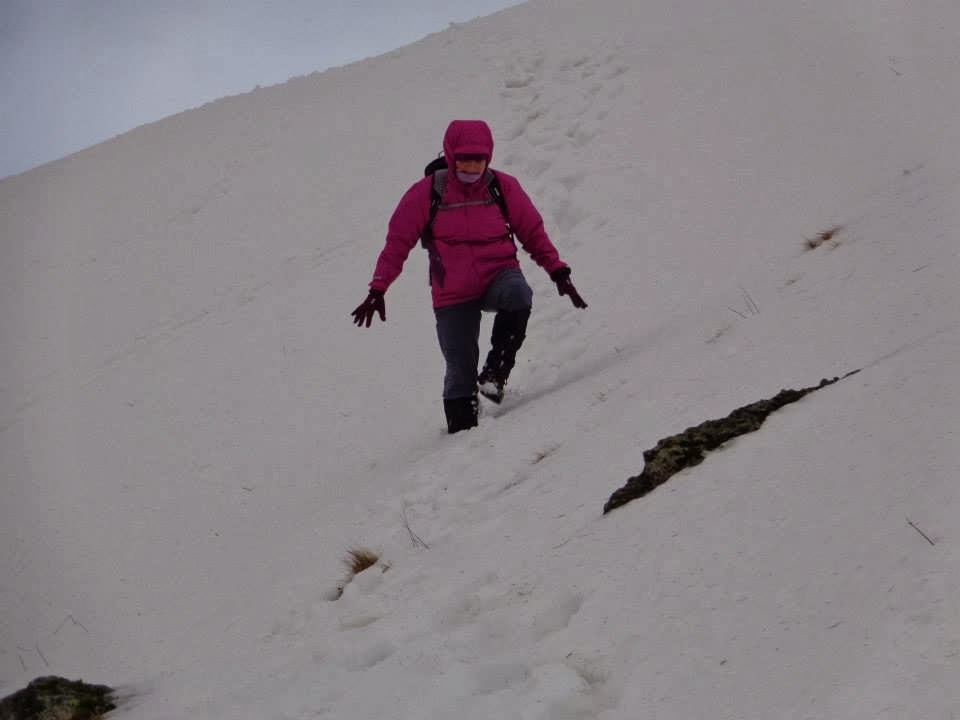
Yesterday I was stood on Base Brown in the Lakes. The views down across Borrowdale were spectacular and the light a little menacing but glorious. The winds were gusty and with ice under your feet and a gale that could blow you over at any moment it felt precarious but the reward was magnificent. Sometimes doing this job feels like that. So much turbulence all around. I learned to seek out the snow and avoid the ice..firm feet make you feel much safer. And I wasn’t alone and I knew my companion to be brave but not foolhardy.
I don’t remember a planning round like this one. So much to take on.. As a CCG we need to be brave we need to keep our feet steady ..rooted in the things we know are right and need to be done whilst not getting blown off course by the many targets and trajectories we are required to submit..There is a risk of getting lost in the process itself.. the worst outcome.. a lovely plan that pleases everyone and yet delivers nothing.. What ever happened to bottom up.. light touch…earned autonomy?
This is THE year.. our chance to change as much as we can as quickly as we can, building on last year.. next year we have elections, smaller management allowances, the better care fund… we have to have changed things this year , we have to be making this happen now.. this week,next week, every week…so fewer people end up in our hospitals, by next year. There are no second chances. By next year it will be too late.
Walks in the Lakes are good.. they clear your head… they give you back a sense of clarity and purpose. The physical challenges replace the intellectual ones for a few hours and allow much needed respite. I think I will be walking a lot this year…..
Monday, 23 December 2013
This Christmas
December has been busy, it always is, everyone trying to fit four weeks' work into two whilst making preparations for celebrating with family and friends.
And much is happening in the health world, we know now what our budget will be next year and the huge hill we have to climb over the next few years. It would be easy to get discouraged. When you look ahead the future seems impossibly bleak (not a good word to use at Christmas), massive, overwhelming challenges and everything you read spreads more doom and gloom.
And yet, last week we had our CCG Christmas do and it was a very upbeat affair. We know we are making a difference. Now. Those differences are important, they aren’t huge but they do matter. We have managed to improve ambulance response times in a rural area that have been stuck at very low levels (56% eight-minute response) for the last 15 years. How?
Partnership working with GPs and the ambulance service and a series of small schemes that stop patients being transported to A&E when they could be treated locally. In October they were up to 81%. We won’t maintain that during the winter we know but know we have a model that we will continue to improve. That makes a difference to people living in a very rural area, who worry that when they need it most an ambulance won’t be there in time.
We have integrated health and social care fast response at night now. What does that mean? Well in means that if an out-of-hours GP visits a frail older person in the middle of the night who isn’t very well but really doesn’t need to be in a hospital bed we have a service that can keep her at home, even if that means someone being with her for a few hours.
We have increased district nursing teams, which had been salami-sliced down to a skeletal service. And it is making a difference you can feel on the ground and measure as emergency admissions are at least holding steady.
And at the same time we think we can pay off our inherited debt and finally get our health economy into balance for the first time in many years.
What has this taught me? Transformation is incremental. It isn’t some big bang that happens overnight. It involves tiny steps. It is all about hearts and minds. It takes time. But it is possible to change things, if you focus on the now.
I don’t just want to tell people what we are planning to do, I want to be able to describe what we have done. I don’t want to spend all my time planning five years down the line whilst being too busy to change tomorrow. We are a little team and resources in terms of human energy and health are finite. There are choices to be made.
So when I think about those huge greys clouds tumbling towards us all over the next few years, my response is to focus on now. To make things different tomorrow, next week and next month. I don’t want to spend too much time worrying myself and our organisation because the risk is that the worry creates paralysis.
Yes I know it is important to have a vision for where you will be in five years. I remember though that I read an article years ago (can’t find it for this blog but know it existed!) which looked at five-year plans and their accuracy and basically very little of the detail in a five-year plan ever comes to pass because so much changes in the mean time.
What we need is a clear direction of travel. A high-level map that will help us find the way but will not insist we travel on the route we originally suggested if a better road is found in the intervening years. Will we be here then? Probably not. Will the NHS landscape have changed again? Definitely. What we do have is an opportunity here and now to make things better for the patients we serve.
Those of you who have read my blog will know I often write about my mother who is 93 and very frail. She has had a tough year, four falls, three emergency admissions, a stay in a nursing home, rapidly progressing problems with her memory and mood.
She is now in an extra care flat and finally she is doing OK. She is smaller than she was a year ago in so many ways but the consistency of the care support she now has and their infinite patience and sensitivity has meant she is coping, for now. What have I learned as her daughter and an NHS leader? Small steps and realistic goals will bring change.
So, happy Christmas. Let us celebrate. So much has gone well this year despite the headlines. We have much to do in the new year!
And much is happening in the health world, we know now what our budget will be next year and the huge hill we have to climb over the next few years. It would be easy to get discouraged. When you look ahead the future seems impossibly bleak (not a good word to use at Christmas), massive, overwhelming challenges and everything you read spreads more doom and gloom.
And yet, last week we had our CCG Christmas do and it was a very upbeat affair. We know we are making a difference. Now. Those differences are important, they aren’t huge but they do matter. We have managed to improve ambulance response times in a rural area that have been stuck at very low levels (56% eight-minute response) for the last 15 years. How?
Partnership working with GPs and the ambulance service and a series of small schemes that stop patients being transported to A&E when they could be treated locally. In October they were up to 81%. We won’t maintain that during the winter we know but know we have a model that we will continue to improve. That makes a difference to people living in a very rural area, who worry that when they need it most an ambulance won’t be there in time.
We have integrated health and social care fast response at night now. What does that mean? Well in means that if an out-of-hours GP visits a frail older person in the middle of the night who isn’t very well but really doesn’t need to be in a hospital bed we have a service that can keep her at home, even if that means someone being with her for a few hours.
We have increased district nursing teams, which had been salami-sliced down to a skeletal service. And it is making a difference you can feel on the ground and measure as emergency admissions are at least holding steady.
And at the same time we think we can pay off our inherited debt and finally get our health economy into balance for the first time in many years.
What has this taught me? Transformation is incremental. It isn’t some big bang that happens overnight. It involves tiny steps. It is all about hearts and minds. It takes time. But it is possible to change things, if you focus on the now.
I don’t just want to tell people what we are planning to do, I want to be able to describe what we have done. I don’t want to spend all my time planning five years down the line whilst being too busy to change tomorrow. We are a little team and resources in terms of human energy and health are finite. There are choices to be made.
So when I think about those huge greys clouds tumbling towards us all over the next few years, my response is to focus on now. To make things different tomorrow, next week and next month. I don’t want to spend too much time worrying myself and our organisation because the risk is that the worry creates paralysis.
Yes I know it is important to have a vision for where you will be in five years. I remember though that I read an article years ago (can’t find it for this blog but know it existed!) which looked at five-year plans and their accuracy and basically very little of the detail in a five-year plan ever comes to pass because so much changes in the mean time.
What we need is a clear direction of travel. A high-level map that will help us find the way but will not insist we travel on the route we originally suggested if a better road is found in the intervening years. Will we be here then? Probably not. Will the NHS landscape have changed again? Definitely. What we do have is an opportunity here and now to make things better for the patients we serve.
Those of you who have read my blog will know I often write about my mother who is 93 and very frail. She has had a tough year, four falls, three emergency admissions, a stay in a nursing home, rapidly progressing problems with her memory and mood.
She is now in an extra care flat and finally she is doing OK. She is smaller than she was a year ago in so many ways but the consistency of the care support she now has and their infinite patience and sensitivity has meant she is coping, for now. What have I learned as her daughter and an NHS leader? Small steps and realistic goals will bring change.
So, happy Christmas. Let us celebrate. So much has gone well this year despite the headlines. We have much to do in the new year!
Monday, 18 November 2013
Health care and politics
Well, we ended up causing a bit of media flurry ( I wouldn’t call it a storm.. that would be a bit of an overstatement!). We didn’t set out to do that but these things happen. The issues underpinning this are worth a bit of unpicking.
We are in the middle of a complex public consultation about paediatric and maternity services in our local area. Not a fight we chose to have but one the local trust asked us to become involved in because the doctors and nurses were concerned about safety and quality standards in the hospital. It has been a long and sometimes challenging journey over more than 2 years. From the beginning we have chosen to do it differently- to get out there and talk to the public with the consultants- at playgroups, childrens centres and sixth form colleges, working with local interest groups and local politicians.
During the present formal part of this we have had about 250 people attend 9 meetings, out of a population of around 120000. After one of the meetings we lodged complaints with the county council about the behaviour of two local councillors. We did that the way we were supposed to, as it told us to on the website. We didn’t “go public” we wrote to the council formally raising our concerns. One of the councillors then chose to share the contents of the complaint with the local press and suddenly we found ourselves in the HSJ and everyone then has a view about the rights and wrongs of it all. Some think we are “naïve”, we need a thicker skin.
I am completely committed to democracy.. .that means I will do everything in my power to make sure that someone who has the opposite opinion to me has the right to express it, as loudly and fully as they wish to. I enjoy debate and discussion and the reasoned development of consensus. I am not intimidated by those who hold opinions entirely opposed to mine. That is how it should be. My job is to clearly express our views, our interpretation of the situation. In those discussions though, we should be able to express our views without unwarranted and baseless attacks on our motives and our integrity. The debate should be about the issues NOT the personalities. We were not “upset” by the behaviour. We are tougher than that. We felt however that behaviour of that sort damaged still further public confidence in all of us who work in the public sector. The people I was with that evening were clinical professionals: those nurses and doctors who have spent their professional lives dedicated to serving their local population to the best of their abilities. They have done so with integrity and professionalism. They were there to talk and to listen. The views they expressed were based on evidence and professional knowledge.
We as a CCG believe we must do the right thing, not the easy thing but the right thing. We are a values driven organisation and have explicitly committed ourselves to developing an open culture that is necessarily different from that pervasive culture of bullying and secrecy that has existed in the NHS for the last few years: the outputs of which are constantly in the news and bring shame to us all. We judge our progress and our success by our values: Integrity, Transparency, Collaboration, Focus, Action , Energy, and Courage.
In a wider context I see the need for same debate. Recently I had an interesting discussion with my kids, now young adults, and their friends about why they don’t vote. They tell me that have nothing in common with the politicians they see on TV: the jeering and point scoring during debates in the Houses of Parliament, the behaviours, the language, the endless sniping, the inability to answer a straight question. They have no confidence in any of them. Neither do they have much confidence now in those who run the health service, or education and social care, for that matter. Interestingly last week there were similar debates on the PM programme on Radio 4 after comments by Jeremy Paxman and Russell Brand.
If we are going to re-establish that trust we have to be different and that means BEHAVE differently. WE all have to behave better and expect better. If we tolerate poor behaviour we are in the end implicitly condoning it. If we as a CCG are committed to treating everyone we come into contact with well, to being open and honest, even when that is difficult, to be respectful and demonstrate integrity. We demand to be treated fairly. We do not expect to be given an easy ride. We enjoy robust and challenging debate. We do not need to be taken care of. But we should expect to be treated with respect. Why should we be accused of being naïve to simply expect to be treated decently? Whilst we as a CCG are busy trying to challenge and change the culture in our corner of the NHS we need also to focus on changing the culture more widely in public life.
It would have been easier to put up and shut up. As everyone has done in the past: oh it is just how they are..it is what you expect from politicians. Why should we do that? If we do nothing – nothing changes. It is important to be brave enough to challenge the status quo. That is why we chose to make that complaint. Not from a place of weakness but from a place of strength. We knew it might make waves but we wanted to put a marker in the sand that says we ( NHS, county councils, politicians etc) as servants of the people shouldn’t treat each other badly in public. It does none of us any favours. Is only makes us all look inept and petty. If we have to resort to personal comments about motives and lack of integrity we have already lost the argument AND lost the respect of the public who watch and listen to the pantomime. I would not tolerate that sort of behaviour in my private life so why should I condone it in my public life?
None of us, know what the public really think. Local politicians are voted in by small percentages of the public. We, in the NHS do consultations, surveys and focus groups but the truth we all have to face is that none of us know what the silent majority, those who don’t come to talk to any of us, really think. If we are ever to improve that situation we have to grapple with this issue, we have to persuade them it is worth participating, that collectively we are worth listening to. We therefore all have a role to play in changing the culture not just of the NHS but of our public life.
We are in the middle of a complex public consultation about paediatric and maternity services in our local area. Not a fight we chose to have but one the local trust asked us to become involved in because the doctors and nurses were concerned about safety and quality standards in the hospital. It has been a long and sometimes challenging journey over more than 2 years. From the beginning we have chosen to do it differently- to get out there and talk to the public with the consultants- at playgroups, childrens centres and sixth form colleges, working with local interest groups and local politicians.
During the present formal part of this we have had about 250 people attend 9 meetings, out of a population of around 120000. After one of the meetings we lodged complaints with the county council about the behaviour of two local councillors. We did that the way we were supposed to, as it told us to on the website. We didn’t “go public” we wrote to the council formally raising our concerns. One of the councillors then chose to share the contents of the complaint with the local press and suddenly we found ourselves in the HSJ and everyone then has a view about the rights and wrongs of it all. Some think we are “naïve”, we need a thicker skin.
I am completely committed to democracy.. .that means I will do everything in my power to make sure that someone who has the opposite opinion to me has the right to express it, as loudly and fully as they wish to. I enjoy debate and discussion and the reasoned development of consensus. I am not intimidated by those who hold opinions entirely opposed to mine. That is how it should be. My job is to clearly express our views, our interpretation of the situation. In those discussions though, we should be able to express our views without unwarranted and baseless attacks on our motives and our integrity. The debate should be about the issues NOT the personalities. We were not “upset” by the behaviour. We are tougher than that. We felt however that behaviour of that sort damaged still further public confidence in all of us who work in the public sector. The people I was with that evening were clinical professionals: those nurses and doctors who have spent their professional lives dedicated to serving their local population to the best of their abilities. They have done so with integrity and professionalism. They were there to talk and to listen. The views they expressed were based on evidence and professional knowledge.
We as a CCG believe we must do the right thing, not the easy thing but the right thing. We are a values driven organisation and have explicitly committed ourselves to developing an open culture that is necessarily different from that pervasive culture of bullying and secrecy that has existed in the NHS for the last few years: the outputs of which are constantly in the news and bring shame to us all. We judge our progress and our success by our values: Integrity, Transparency, Collaboration, Focus, Action , Energy, and Courage.
In a wider context I see the need for same debate. Recently I had an interesting discussion with my kids, now young adults, and their friends about why they don’t vote. They tell me that have nothing in common with the politicians they see on TV: the jeering and point scoring during debates in the Houses of Parliament, the behaviours, the language, the endless sniping, the inability to answer a straight question. They have no confidence in any of them. Neither do they have much confidence now in those who run the health service, or education and social care, for that matter. Interestingly last week there were similar debates on the PM programme on Radio 4 after comments by Jeremy Paxman and Russell Brand.
If we are going to re-establish that trust we have to be different and that means BEHAVE differently. WE all have to behave better and expect better. If we tolerate poor behaviour we are in the end implicitly condoning it. If we as a CCG are committed to treating everyone we come into contact with well, to being open and honest, even when that is difficult, to be respectful and demonstrate integrity. We demand to be treated fairly. We do not expect to be given an easy ride. We enjoy robust and challenging debate. We do not need to be taken care of. But we should expect to be treated with respect. Why should we be accused of being naïve to simply expect to be treated decently? Whilst we as a CCG are busy trying to challenge and change the culture in our corner of the NHS we need also to focus on changing the culture more widely in public life.
It would have been easier to put up and shut up. As everyone has done in the past: oh it is just how they are..it is what you expect from politicians. Why should we do that? If we do nothing – nothing changes. It is important to be brave enough to challenge the status quo. That is why we chose to make that complaint. Not from a place of weakness but from a place of strength. We knew it might make waves but we wanted to put a marker in the sand that says we ( NHS, county councils, politicians etc) as servants of the people shouldn’t treat each other badly in public. It does none of us any favours. Is only makes us all look inept and petty. If we have to resort to personal comments about motives and lack of integrity we have already lost the argument AND lost the respect of the public who watch and listen to the pantomime. I would not tolerate that sort of behaviour in my private life so why should I condone it in my public life?
None of us, know what the public really think. Local politicians are voted in by small percentages of the public. We, in the NHS do consultations, surveys and focus groups but the truth we all have to face is that none of us know what the silent majority, those who don’t come to talk to any of us, really think. If we are ever to improve that situation we have to grapple with this issue, we have to persuade them it is worth participating, that collectively we are worth listening to. We therefore all have a role to play in changing the culture not just of the NHS but of our public life.
Tuesday, 22 October 2013
Changing primary care: The baby and the bath water
A lot has been written about primary care recently. Everyone who is anyone appears to believe it requires a major overhaul. I have always been a bit of a change junkie. I love the adrenaline that goes with shaking everything up and starting all over again. We were the first practice in the north to have a nurse practitioner, in fact we had to train our own because there weren't any courses in the north then. I ended up designing a course at York uni because of that in the following years to fill the gap. I believe in skill mixed teams working around the needs of individuals And I worked hard to keep the holistic part of general practice alive that I think is so fundamental to uk general practice. Alive despite a bigger team. I have worked to change health care and mould it to meet the challenges of life today and yet all the talk of radical overhaul makes me uncharacteristically anxious. I am wondering why.
It think it has to do with losing the relationship that builds over years between a GP and their patients. Lots of small encounters. Most of which could probably be done by someone less qualified but which build a human bond of trust and knowledge. I know it has all but disappeared in many places. People see different people with different skills each time they go and mostly I don't suppose they mind much. A member of my family had a sore eye this week. He made an online appointment and saw a doctor the next day. He hadn't seen her before but wasn't bothered and was treated effectively So does it matter that we no longer have that relationship between a patient and" their" doctor? I wonder sometimes if the phrase "you never know what you had till it's gone" will be the epitaph of general practice as we know it.
Let's look at the facts. Patients value primary care. Satisfaction rates are really high. Most other private or public services would love to have the kind of satisfaction rates GPs have. Primary care sees 90% of all NHS contacts every day and treats 90% of those without sending them anywhere else. Yes people struggle for appointments sometimes. There is real clinical variation that we need to confront and improve. Primary care is under considerable strain , but as Clare Gerada talked about that is because of real funding pressure which has resulted In a decrease in investment whilst demand rises.
Before we rush to new models based on the sound bites of important people who actually know very little about how the service works day to day can we first answer some simple questions. What is primary care for? What do we as a nation really value about the service now that we don't want to throw away in the rush for change?
My view is that primary care is : 1. A front door into urgent care. 2. Deals with minor illness 3. Manages complex long term physical and mental problems 4. Is a safe place for people who don't know where else to go for support and advice.
Now , you could take each aspect and give it to new service that deals with just that. There is already evidence from around the country of GPs running urgent care services alongside more traditional primary care. Let's stop and looks at them before we decide is the right model. In Bassetlaw such a service exists. Patients and staff like it but it hasn't solved the problem of demand in A&E round the corner. Minor illness services were available in Darzi centres and many of them are closing.
One of the joys of being a GP and I think one of the most important motivators for maintaining a work force in primary care is the on-going relationship with patients. Perhaps rather than analysing each patient contact and asking who else other than a GP could do that, we need to see each contact as part of a long term relationship forming the platform upon which you build what is needed when it is time to deal with big significant illness when trust and human factors become a huge part of the transaction between patients and their doctors. Each GP I talk to has their stories. I have mine. The young woman terrorised for years by the husband who planned for 4 years to leave him by educating herself and scrapping together savings from her housekeeping, her flight when he was posted away, her necessary complete break from her family and friends who had helped him find her during previous escapes. And I was the only person she confided in. She didn't trust anyone else. And a postcard 2 years later to tell me she and her kids were safe and happy. She didn't have a medical illness. And perhaps she would have found someone else if she had not found me. And perhaps it didn't matter and she would have done it without me but I like to think seeing her every few weeks for those 4 years gave her a safe place to express her fears and formulate her plans.
Or being able to pick up something unusual because you know the patient: the very eldery woman who had been a patient at our practice for years and came because she had had a little “wobble”. Very little to find clinically but she just wasn’t her usual self. If she had been assessed by people who didn’t know her they might have just thought she was mildly senile, we knew she wasn’t right. She had a cerebral bleed, not related to a fall but to a bony metastasis in her skull eroding a blood vessel.
I have could go on.
GPs also manage risk better than any other group of clinicians I know. Every day they make decisions using only the tools they have in their heads and their bags to filter the serious from the " got some time to sort this one out". Until you have done the job you don't really get that. Going home and thinking through that one nagging case of the day and wondering if you got it right. You can't send everyone on. The system wouldn't cope. It is our job to get it right every time. If we get it wrong we are rightly criticised. If we get in right no one notices. But that is the job and I am not complaining. I am just saying it is more complex than most think it is. May be can’t afford this model any more. Maybe we have to accept something different.
But before we change everything can we somehow have a real discussion about what primary cares job is, what we care about keeping, learn from what has been tried around the country, and really trial and evaluate new ideas before rolling them out.
Can we think about evolving primary care rather than revolutionising it? We all know that 70% of major change initiatives fail to deliver their stated objectives. ( I remember David Nicolson told me that when they first announced CCGs)
And try just this once to keep the baby whilst throwing out the bath water.
It think it has to do with losing the relationship that builds over years between a GP and their patients. Lots of small encounters. Most of which could probably be done by someone less qualified but which build a human bond of trust and knowledge. I know it has all but disappeared in many places. People see different people with different skills each time they go and mostly I don't suppose they mind much. A member of my family had a sore eye this week. He made an online appointment and saw a doctor the next day. He hadn't seen her before but wasn't bothered and was treated effectively So does it matter that we no longer have that relationship between a patient and" their" doctor? I wonder sometimes if the phrase "you never know what you had till it's gone" will be the epitaph of general practice as we know it.
Let's look at the facts. Patients value primary care. Satisfaction rates are really high. Most other private or public services would love to have the kind of satisfaction rates GPs have. Primary care sees 90% of all NHS contacts every day and treats 90% of those without sending them anywhere else. Yes people struggle for appointments sometimes. There is real clinical variation that we need to confront and improve. Primary care is under considerable strain , but as Clare Gerada talked about that is because of real funding pressure which has resulted In a decrease in investment whilst demand rises.
Before we rush to new models based on the sound bites of important people who actually know very little about how the service works day to day can we first answer some simple questions. What is primary care for? What do we as a nation really value about the service now that we don't want to throw away in the rush for change?
My view is that primary care is : 1. A front door into urgent care. 2. Deals with minor illness 3. Manages complex long term physical and mental problems 4. Is a safe place for people who don't know where else to go for support and advice.
Now , you could take each aspect and give it to new service that deals with just that. There is already evidence from around the country of GPs running urgent care services alongside more traditional primary care. Let's stop and looks at them before we decide is the right model. In Bassetlaw such a service exists. Patients and staff like it but it hasn't solved the problem of demand in A&E round the corner. Minor illness services were available in Darzi centres and many of them are closing.
One of the joys of being a GP and I think one of the most important motivators for maintaining a work force in primary care is the on-going relationship with patients. Perhaps rather than analysing each patient contact and asking who else other than a GP could do that, we need to see each contact as part of a long term relationship forming the platform upon which you build what is needed when it is time to deal with big significant illness when trust and human factors become a huge part of the transaction between patients and their doctors. Each GP I talk to has their stories. I have mine. The young woman terrorised for years by the husband who planned for 4 years to leave him by educating herself and scrapping together savings from her housekeeping, her flight when he was posted away, her necessary complete break from her family and friends who had helped him find her during previous escapes. And I was the only person she confided in. She didn't trust anyone else. And a postcard 2 years later to tell me she and her kids were safe and happy. She didn't have a medical illness. And perhaps she would have found someone else if she had not found me. And perhaps it didn't matter and she would have done it without me but I like to think seeing her every few weeks for those 4 years gave her a safe place to express her fears and formulate her plans.
Or being able to pick up something unusual because you know the patient: the very eldery woman who had been a patient at our practice for years and came because she had had a little “wobble”. Very little to find clinically but she just wasn’t her usual self. If she had been assessed by people who didn’t know her they might have just thought she was mildly senile, we knew she wasn’t right. She had a cerebral bleed, not related to a fall but to a bony metastasis in her skull eroding a blood vessel.
I have could go on.
GPs also manage risk better than any other group of clinicians I know. Every day they make decisions using only the tools they have in their heads and their bags to filter the serious from the " got some time to sort this one out". Until you have done the job you don't really get that. Going home and thinking through that one nagging case of the day and wondering if you got it right. You can't send everyone on. The system wouldn't cope. It is our job to get it right every time. If we get it wrong we are rightly criticised. If we get in right no one notices. But that is the job and I am not complaining. I am just saying it is more complex than most think it is. May be can’t afford this model any more. Maybe we have to accept something different.
But before we change everything can we somehow have a real discussion about what primary cares job is, what we care about keeping, learn from what has been tried around the country, and really trial and evaluate new ideas before rolling them out.
Can we think about evolving primary care rather than revolutionising it? We all know that 70% of major change initiatives fail to deliver their stated objectives. ( I remember David Nicolson told me that when they first announced CCGs)
And try just this once to keep the baby whilst throwing out the bath water.
Friday, 6 September 2013
What does safety mean?
On 2nd September, our CCG launched a consultation about proposed changes to children’s and maternity services at the Friarage Hospital in Northallerton. I have written about this before. We have been doing this work for the past 2 years and it has been a bumpy ride. It’s a complicated issues and it’s difficult for the public to understand. This week I have been going back to basics in many media interviews to explain why we need to make changes to services there. I’ve explained that it really isn’t about money. As a CCG we pay for each patient that goes into hospital. No matter where they are treated, it costs us the same. It is all about safety and quality.
It is interesting isn’t it that despite all the publicity about safety in the NHS, when we did our engagement exercise people rated services being close to home above safety. I can only assume that is because we as a community still assume that if a service is there, it must be safe. And yet when I explain that is isn’t, people want to fight to keep it open anyway. The obvious conclusion is we mustn’t be very good at explaining what safety really means. So this time when I was interviewed I talked about reducing death rates and disability after illness. That evidence tells us babies born in obstetric units where consultants are present on the ward all the time have a lower chance of sustaining birth injuries than those where the consultants are on call from home. Children in other European countries who travel further to more distant large children’s units have lower child death rates than we do. Some people have said that is too blunt. Too scary! So my question is how do we get it right? Clinicians know what we mean by safety but it is clear others don’t. If parents had to sign of a form saying that they agreed to their child being admitted to a less safe service than there is at the hospital in the next town, would they sign it? I wouldn’t. And yet by our CCG sanctioning the continuation of a service we know to be less safe, we are effectively doing this on behalf of all our patients aren’t we?
Of course no service is completely safe. There is no such thing as 100% safety. But surely if we can see a way of improving safety from 94% to 97%, then that is worthwhile? Imagine if that increase of 3% saved your child or your baby. The Friarage is a lovely hospital; small friendly, quiet. Lots of one to one care. When things go well there is no better place to be. But when things go wrong I would rather my children, my grandchildren were safe is a bigger perhaps more impersonal environment where the expert teams who see and deal with emergencies every day are there on hand when we need them. So that means that if there is a small chance of that happening - if my daughter had a high risk pregnancy or my grandchild was hot, lethargic and not responding to the usual things that make little people better, I would drive further for them to be where it is safer. If I would do that for my own family, why would I not want it for everyone whose health care standards are now my responsibility?
How have we come to our conclusions? We have listened to those people who are experts in the field and know far more than we do. Consultants who have delivered care at the hospital for years and national experts whose job it is to understand what makes a service safe. They have all said we are doing the right thing. Hilary Cass President of the Royal College of Paediatrics and Child Health, The NCAT inspection team led by Professor Chris Clough and the whole consultant body at South Tees Hospital NHS Foundation Trust all agree.
And then we are left with a dilemma. We are accused of not listening to the public if we do not agree with them and instead do what we believe is the right thing to ensure the safety of our patients. Surely that is a fundamental principle we shouldn’t compromise on.
We can address issues of transport, of accessibility to other local trusts (some of which are as near for many of our residents as the Friarage is), we can improve community children’s nursing so many of the services some children have in hospital now can be delivered at home. But if we can’t compromise on safety will we always be accused of not listening to the concerns of those who campaign against us? And finally who speaks for the silent majority who do not respond to our invitation to talk to us? Are they with us or against us? I wonder what their views are about it all.
It is interesting isn’t it that despite all the publicity about safety in the NHS, when we did our engagement exercise people rated services being close to home above safety. I can only assume that is because we as a community still assume that if a service is there, it must be safe. And yet when I explain that is isn’t, people want to fight to keep it open anyway. The obvious conclusion is we mustn’t be very good at explaining what safety really means. So this time when I was interviewed I talked about reducing death rates and disability after illness. That evidence tells us babies born in obstetric units where consultants are present on the ward all the time have a lower chance of sustaining birth injuries than those where the consultants are on call from home. Children in other European countries who travel further to more distant large children’s units have lower child death rates than we do. Some people have said that is too blunt. Too scary! So my question is how do we get it right? Clinicians know what we mean by safety but it is clear others don’t. If parents had to sign of a form saying that they agreed to their child being admitted to a less safe service than there is at the hospital in the next town, would they sign it? I wouldn’t. And yet by our CCG sanctioning the continuation of a service we know to be less safe, we are effectively doing this on behalf of all our patients aren’t we?
Of course no service is completely safe. There is no such thing as 100% safety. But surely if we can see a way of improving safety from 94% to 97%, then that is worthwhile? Imagine if that increase of 3% saved your child or your baby. The Friarage is a lovely hospital; small friendly, quiet. Lots of one to one care. When things go well there is no better place to be. But when things go wrong I would rather my children, my grandchildren were safe is a bigger perhaps more impersonal environment where the expert teams who see and deal with emergencies every day are there on hand when we need them. So that means that if there is a small chance of that happening - if my daughter had a high risk pregnancy or my grandchild was hot, lethargic and not responding to the usual things that make little people better, I would drive further for them to be where it is safer. If I would do that for my own family, why would I not want it for everyone whose health care standards are now my responsibility?
How have we come to our conclusions? We have listened to those people who are experts in the field and know far more than we do. Consultants who have delivered care at the hospital for years and national experts whose job it is to understand what makes a service safe. They have all said we are doing the right thing. Hilary Cass President of the Royal College of Paediatrics and Child Health, The NCAT inspection team led by Professor Chris Clough and the whole consultant body at South Tees Hospital NHS Foundation Trust all agree.
And then we are left with a dilemma. We are accused of not listening to the public if we do not agree with them and instead do what we believe is the right thing to ensure the safety of our patients. Surely that is a fundamental principle we shouldn’t compromise on.
We can address issues of transport, of accessibility to other local trusts (some of which are as near for many of our residents as the Friarage is), we can improve community children’s nursing so many of the services some children have in hospital now can be delivered at home. But if we can’t compromise on safety will we always be accused of not listening to the concerns of those who campaign against us? And finally who speaks for the silent majority who do not respond to our invitation to talk to us? Are they with us or against us? I wonder what their views are about it all.
Subscribe to:
Posts (Atom)